A client of mine came in recently wanting to look at her HRV data, and somewhere in that conversation I realised I was talking about my own sleep score with more emotional investment than is probably healthy. So, in the interest of honesty, and because I think a lot of you are in exactly the same boat, let's talk about wearable wellness devices.
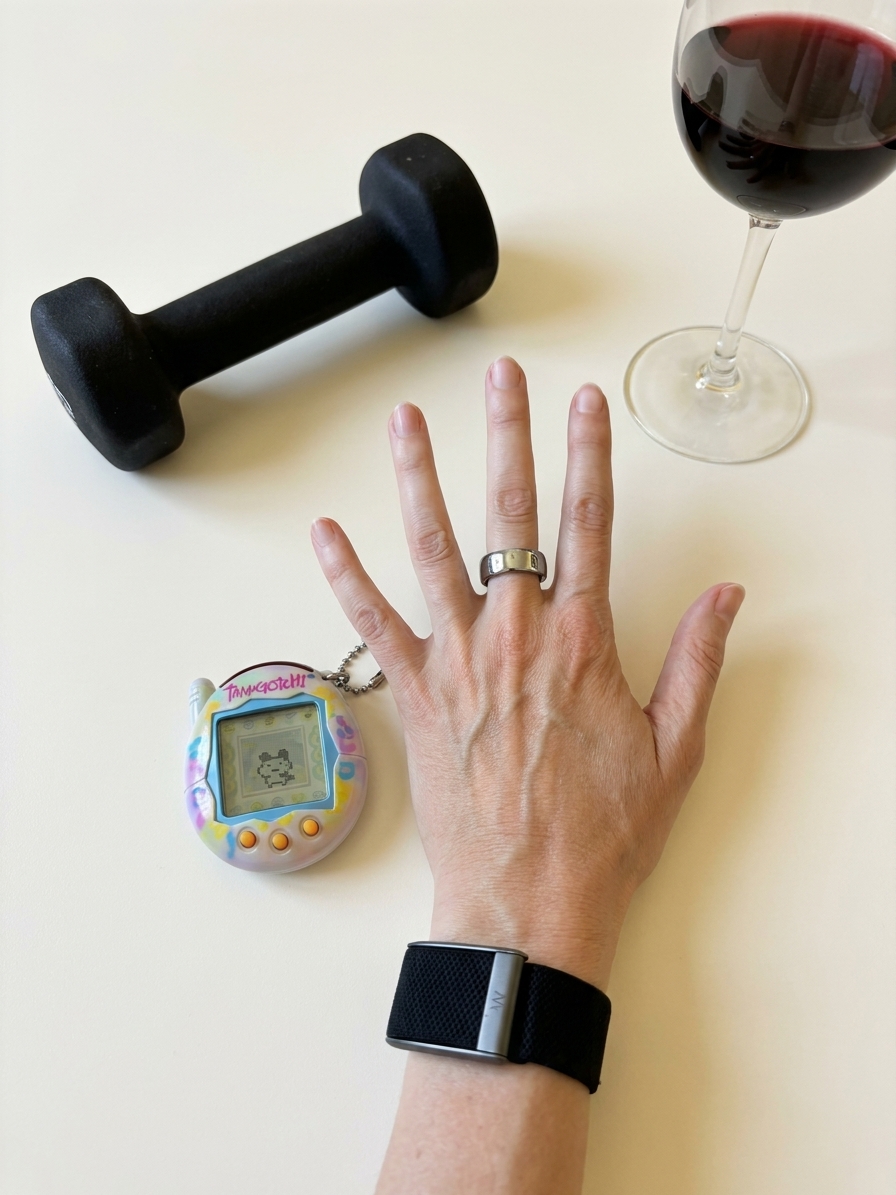
I currently have an Oura ring, which I've worn for a few years, and a Whoop band, which is newer and with which I have a complicated relationship. I read a line once, somewhere I can no longer remember, that these things are basically Tamagotchis, except the small creature you're desperately trying to keep alive is yourself. I laughed. Then I felt seen. Then I checked my readiness score.
A Day in the Life of Someone Who Has Gone a Bit Far With This
I'm not fully down the biohacking rabbit hole, no cold plunges filmed for content here, but I'd be lying if I said I was a casual observer either. I take my supplements. I count my protein. I hop on my smart scale now and then to see what my body composition is doing. I check my Oura app most mornings the way some people check the weather. And I have, on more than one occasion, had a genuine, if one-sided, argument with my Whoop about a strain score I felt was insulting given the Advanced Power Yoga class I'd just survived.
I actually stopped wearing my Apple Watch a while back, not because I don't like Apple, but because I'd linked so many apps to it that my arm buzzed constantly with things it apparently thought I needed to know right that second. That wasn't helping. That was just another stream of notifications on a body part I'd rather leave alone. Whoop, with no screen at all, felt like a relief by comparison, which tells you something about where my bar had ended up.
The Bit Where I Admit It Might Be a Problem
Here's the genuinely uncomfortable part. I get an actual little hit of satisfaction from a good score, sleep, strain, readiness, whichever one is currently in favour. And I have caught myself getting twitchy on a night out because I knew a late one would wreck my sleep score. I have turned down a glass of wine for the same reason. Not because I desperately wanted the wine and heroically resisted, but because a small ring on my finger had quietly negotiated the decision before I'd properly thought about it.
Is that a good thing? Genuinely, I don't know. It keeps me accountable to goals I've actually set for myself, and there's real value in that. But it also means more screen time, a more regimented relationship with my own body than I probably need, and occasionally being bullied by an app into declining a second glass of wine on a Friday. Both of those things are true at once. I haven't resolved it. I'm not sure it needs resolving, so much as noticing.
Why These Two, Specifically
Oura's strength is the wellness and recovery side, sleep, HRV, the softer picture of how you're actually doing, and it happens to look rather nice on a finger too. Whoop leans harder into sports performance, which is exactly where it and I disagree most often, because I am not an athlete, I am a Pilates and yoga teacher who occasionally gets a strain score so low for a genuinely hard class that I feel personally challenged by a wristband. I will never run a marathon. Whoop, bless it, seems to be quietly holding out hope that I might.
On Accuracy, Broadly Speaking
Who really knows how accurate any of these things are in an absolute sense. My smart scale, for instance, is utterly convinced my left arm is 120% larger than my right. It is not. But it's consistently, confidently wrong in the same direction every time, which actually makes it useful, because I'm not comparing myself to some universal standard, I'm comparing myself to my own last measurement. Oura and Whoop disagree with each other on how well I slept more often than either would probably like to admit, and neither takes it well when you point that out. When that happens, I just pick whichever one matches how I actually feel that morning and quietly ignore the other. There's a lesson in there somewhere about trusting your own body over any single device, which is a slightly ironic thing to learn from wearing two of them at once.
There's a whole world of other options out there too, Garmin, Fitbit, and plenty more I couldn't confidently list, so consider this one person's experience rather than any kind of buyer's guide.
The Bit Worth Actually Thinking About
One thing genuinely worth a moment's thought, separate from all the score-chasing: you're handing over a remarkable amount of very personal data to these companies, willingly and constantly, and that data has real value to someone. We've all heard the stories, a former US president's Peloton failing White House security screening, soldiers unknowingly broadcasting their exact location by leaving their running routes public on Strava. It's worth knowing what you're sharing, who can see it, and whether you're actually comfortable with that, rather than never thinking about it at all.
So, Should You Wear One?
I'm not going to tell you. That's rather the point of this post. I love mine, in a way that occasionally borders on the unhinged, and I'm perfectly happy to take the mick out of myself for it. Whether a ring or a wristband ends up helping you or bossing you about probably depends more on you than the device. Mine, for the record, has talked me out of a good glass of wine more than once. And I let it.