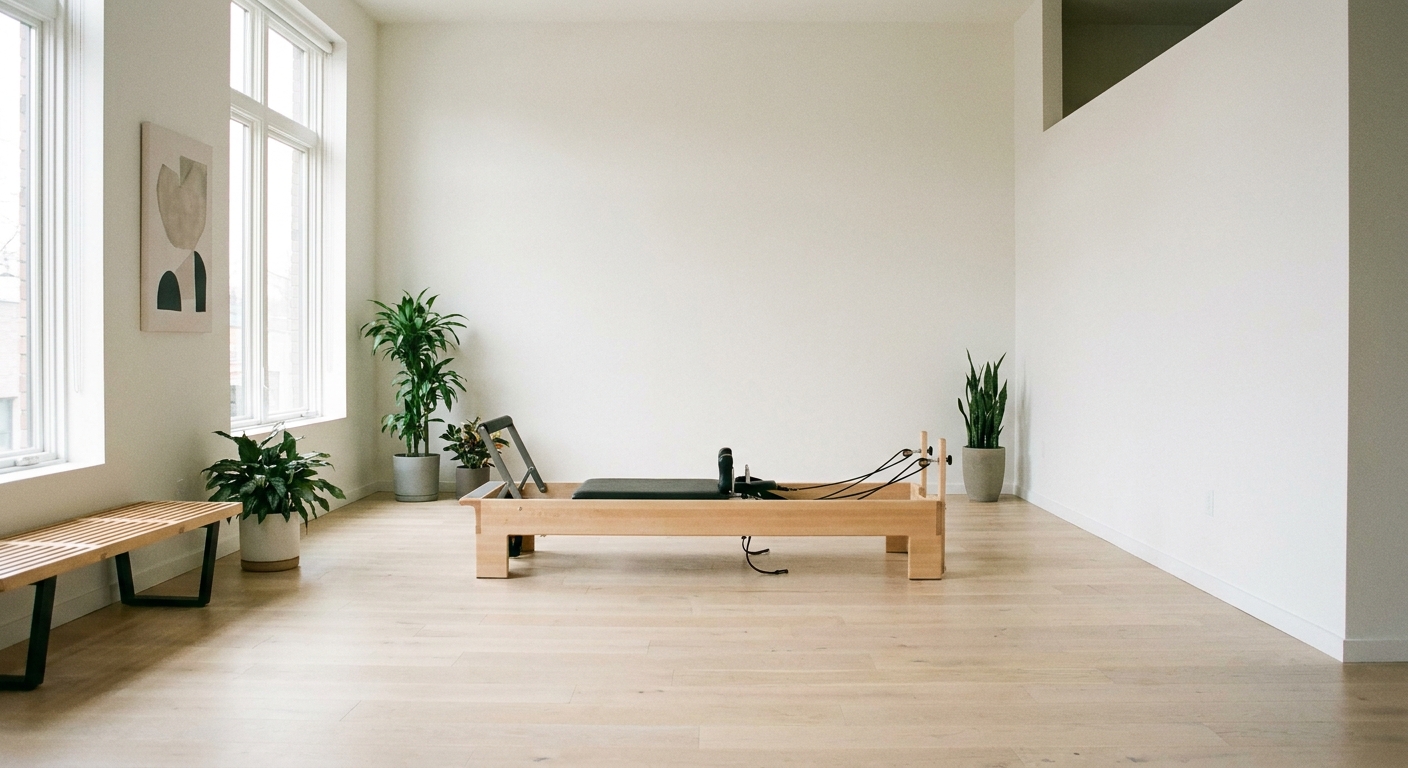
Reformer Pilates studios are mushrooming everywhere. I mean everywhere. Even Aldi is selling reformers now. If that doesn't tell you we're in the middle of a Pilates equipment boom, I don't know what does.
And with this boom comes a very persistent misconception: that reformer Pilates is somehow "better" or "more advanced" than mat Pilates. That equipment work is what you graduate to once you've mastered the basics on the mat.
My heart sinks a little every time a client tells me they think they need to move to equipment classes because they're "ready for something more challenging."
So let's talk about what Pilates equipment is actually for - and what you really need to build a sustainable, effective practice.
The History Changes Everything
Here's a fun fact that shifts how we think about all of this:
Joseph Pilates developed his equipment to assist people who weren't strong enough to do his matwork classes.
Read that again.
The equipment wasn't created as an "advanced" progression. It was created to make the work accessible to people who couldn't yet manage the mat exercises. The springs provide support, feedback, and assistance where your body needs it.
This doesn't mean equipment work is easy (it absolutely can be challenging), but it fundamentally changes the hierarchy we've built in our heads. Equipment isn't "better" - it's different. It's a tool with specific purposes.
Sometimes Mat Is Actually Harder
Let me give you a concrete example.
Legs in straps on the reformer is practically everyone's favourite Pilates exercise. It feels good, the springs support your legs, and you can move through a satisfying range of motion with control.
Now compare that to fully controlled single-leg circles on the mat.
No springs. No assistance. Just you, gravity, and the challenge of keeping your pelvis absolutely still while one leg traces controlled circles in the air. Your core has to do all the stabilizing work. Your supporting leg has to anchor. Your hip has to move independently from your pelvis.
It's significantly harder.
This isn't to say one is better than the other - they're working your body in different ways. But the assumption that equipment = more advanced simply doesn't hold up.
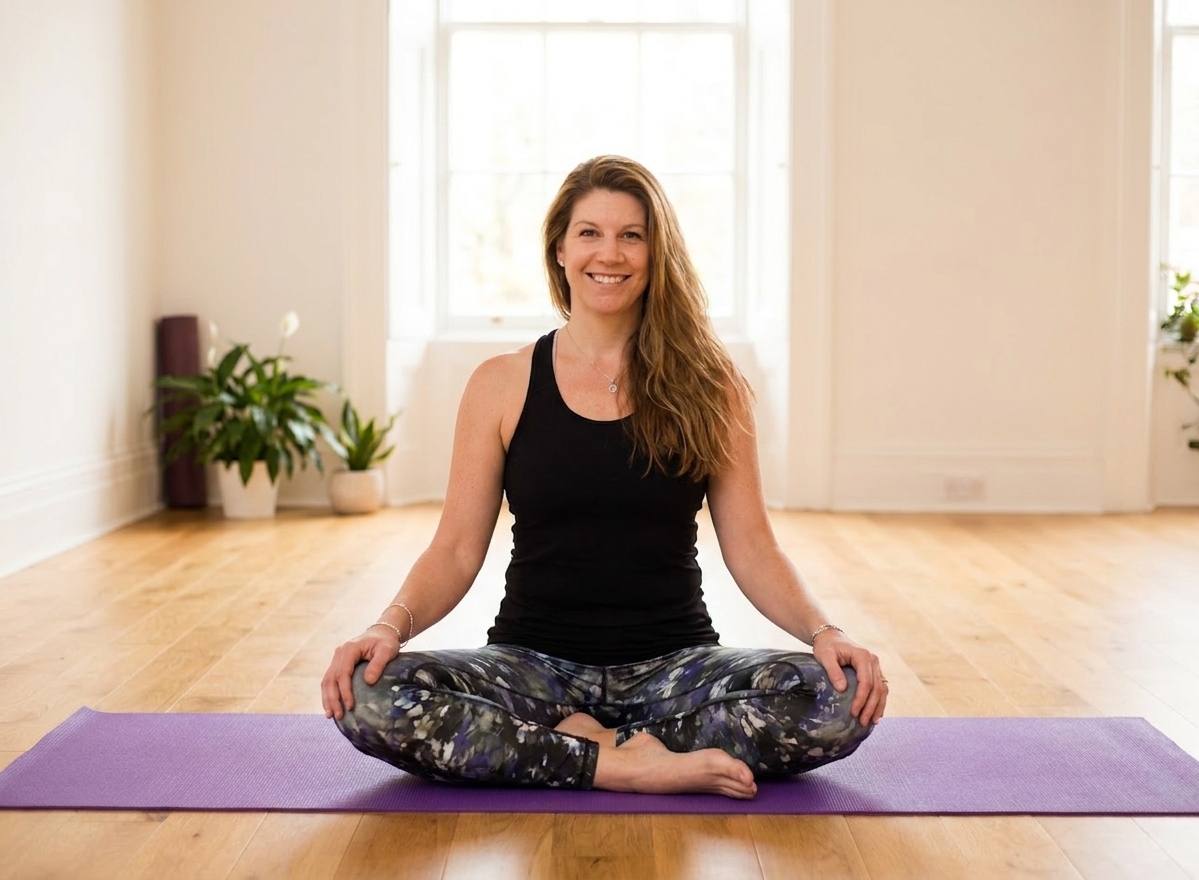
The mat requires full-body control without any external support. That's its own kind of challenging.
When Equipment Is Actually Useful
So if equipment isn't "advanced Pilates," what is it for?
Equipment is brilliant when you want to:
Assist: Support your body where you're not yet strong enough to work against gravity alone. The springs can hold some of the load while you build strength and control.
Challenge: Add resistance in specific directions to make exercises harder. The same springs that assist in one direction challenge in another.
Provide feedback: Springs give you immediate physical feedback about your alignment, control, and effort. It's harder to cheat when a spring is telling on you.
Work with injury: Modify exercises safely when you can't load certain positions or movements. Equipment opens up options that might not be available on the mat.
Keep the mind-body connection active: Variety matters. Different apparatus challenge your body to solve familiar movement problems in new ways, keeping your nervous system engaged.
Discover new approaches: Sometimes working an exercise on a different piece of apparatus helps you finally understand what your teacher has been trying to get you to feel for months.
All of these are valuable. Equipment is a tool. It's useful. But it's not inherently superior to matwork.
The Bone Density Conversation We Need to Have
This one stings a bit, but it needs saying.
A client once told me they were leaving to join a reformer studio because they'd been diagnosed with osteopenia and needed "the resistance to build bone density."
I understood their reasoning. And it hurt to know they'd been sold something that wouldn't actually achieve what they needed.
Here's the harsh truth: Reformer footwork will not improve your bone density.
Even though you're working against resistance, even though it feels like effort, the load simply isn't heavy enough to trigger the bone remodeling response your body needs. Bone density responds to progressive, heavy resistance training - the kind you get from lifting genuinely heavy weights, not the springs on a reformer.
Does that make reformer work useless? Absolutely not.
Both mat and reformer Pilates build the endurance strength, control, core stability, and body awareness you need to safelytackle heavy gym weights if that's a progression you want to make. They create the foundation. They teach you to move well under load. They help prevent injury when you do pick up that heavy barbell.
But they're not a replacement for actual bone-loading work.
If you have osteopenia or osteoporosis, you need a comprehensive approach: Pilates (mat or equipment) for movement quality and control, plus progressive resistance training with appropriate loading, plus attention to nutrition and other factors. Not one or the other.
Can Mat Be Enough?
Absolutely.
But also... probably not just mat.
The same way weights alone probably aren't enough. Or cardio alone. Or reformer work alone.
The magic happens in the variety and quality of your movement practices.
Your body thrives on being challenged in different ways. It needs strength work and cardiovascular conditioning and mobility and balance and coordination and nervous system regulation. It needs to lift heavy things sometimes and move gently other times. It needs to practice control and also just move.
If you can only do one modality - whether that's mat Pilates, equipment Pilates, yoga, or strength training - pick the one you'll actually do consistently and do it well. That's infinitely better than the "perfect" programme you never stick to.
And honestly? If you're only going to pick one thing, Pilates (mat or equipment) is a pretty solid choice. It touches on strength, control, mobility, body awareness, and breathwork all in one practice. That's not nothing.
The Real Questions You Should Be Asking
Forget "which is better." Ask yourself these instead:
What do I have easy access to?
If the nearest reformer studio you actually like is a 30-minute commute away and isn't open on weekends when you have free time, it's not going to serve you as well as a simple mat on your floor in front of a camera at 7am on Saturday morning.
Accessibility matters. Convenience matters. These aren't secondary considerations - they're primary ones, because they determine whether you'll actually do the work.
What do I enjoy?
Some people love the tactile feedback of springs and straps. Others find equipment distracting and prefer the simplicity of mat work. Some people thrive in studio classes with apparatus. Others need the flexibility of home practice.
All of these preferences are valid. The "best" Pilates is the one that makes you want to come back.
What makes me show up consistently?
This is the question that matters most.
An "imperfect" practice you do three times a week beats a "perfect" practice you do once a month. The studio with the fancy equipment that you rarely make it to isn't serving you better than the mat practice you can fit into your morning routine.
Consistency beats optimisation every single time.
Here's What I Actually Think
After 25 years of teaching both mat and equipment work, here's my honest take:
The reformer isn't what Instagram told you it is. It's not "advanced Pilates" or automatically more effective. It's a tool with specific applications - brilliant for some things, unnecessary for others.
Mat work isn't inferior or "just for beginners." It's its own complete practice that can challenge you for decades.
Neither is inherently better. They're different. They serve different purposes. And frankly, the most important factor isn't which one you choose - it's whether you'll actually do it regularly and do it well.
If you have access to good equipment instruction and enjoy it, fantastic. If you prefer mat work or that's what's accessible to you, equally fantastic. If you like mixing both, brilliant.
The "best" Pilates practice is the one that:
You can access regularly
You enjoy enough to keep coming back to
Challenges you appropriately for your current body
Helps you move better in your actual life
That might involve a reformer. It might not. Both paths will serve you well if you commit to them.
Work With Me
I teach both mat-based work and can guide you in working with equipment if you have access to it. My private online sessions are designed around what YOU need and what you have available - whether that's a full home studio setup or just a mat and some household items we can improvise with.
The goal isn't to get you on the "right" apparatus. It's to help you build a sustainable practice that actually works for your body and your life.
Learn more about working with me →
Anja Dobler Integrated Movement & Breathwork Specialist Based in Berlin | Teaching internationally online www.anjadobler.com